Purchasing Process: Definition, Key Steps, Best Practices

Daftar Isi
Requests, approvals, and paperwork can all slow down the purchasing process, making it appear cumbersome. However, when managed appropriately, this process can provide opportunities for growth and savings. Understanding its importance enables firms to identify and strengthen cost-cutting solutions more effectively.
According to MyNZTE, government agencies directly manage Small Value Purchases of up to S$6,000, demonstrating how simpler requests and approvals minimize purchase complexity while boosting efficiency, cost savings, and overall management.
This article explores key concepts, including the distinction between purchasing and procurement, the advantages of a formal process, the seven primary processes, common challenges, and effective best practices. Business executives should carefully review these points to acquire clarity and understand how to improve their purchase process.
 Key Takeaways
- The purchasing process is a structured method businesses use to acquire necessary goods and services, which is distinct from the broader procurement strategy.
- The seven core steps of the purchasing process ensure every purchase is properly requested, approved, documented, and paid for in a consistent and traceable manner.
- Best practices for optimizing your purchasing process involve using automation, standardization, and KPI tracking to turn purchasing into a growth driver.
- ScaleOcean’s purchasing software helps you manage your purchasing process seamlessly, solving key challenges and providing total visibility over company spending.
1. What is the Purchasing Process?
The purchasing process is an organized set of procedures that a corporation takes to purchase goods and services. This purchasing process definition starts with identifying a need and concludes with paying the vendor and recording the transaction, ensuring all purchases are intentional, approved, and documented.
The purchasing procedure comprises several divisions, from requesters to finance, which ensures unambiguous accountability. A structured flow, as seen in a purchasing process chart, keeps everyone on track and assures seamless operations, cost control, and compliance throughout the firm.
2. The Crucial Distinction Between Purchasing and Procurement Process
The purchase process is the transactional stage that fulfills a company’s purchasing requirements. It entails putting buy orders, receiving items, and processing payments. This stage ensures the business purchasing process remains accurate, recorded, and aligned with business needs.
In contrast, the procurement process is part of a larger strategic cycle. It goes beyond transactions and includes supplier selection, contract negotiation, and vendor relationship management. Procurement ensures that firms acquire long-term value and establish lasting partnerships.
3. Why is a Formal Purchasing Process Important?

A systematic purchasing procedure establishes a dependable framework that the entire firm may use. This consistency highlights the importance of the purchasing process in building efficiency, accountability, and cost control, creating clear norms that improve decision-making across departments.
Companies without a clear methodology run the danger of rogue expenditure, missing savings, and inadequate expense control. Formalization maintains order and promotes long-term progress. Here are the main reasons why an organized purchasing process is important:
a. Efficiency
A standardized purchasing process flow chart streamlines the buying cycle, resulting in faster and more organized transactions. Team members have a clear understanding of each step, the required approvals, and the necessary documentation, which eliminates confusion and speeds up the workflow.
When tasks are structured and repeatable, superfluous communication and delays are reduced dramatically. This clarity guarantees that resources are secured faster, allowing teams to focus on their primary duties while operations function smoothly and reliably.
b. Transparency and Accountability
A systematic purchasing process gives clear visibility into spending and creates a dependable audit trail. Each request, permission, order, and payment is logged, making it easy to keep financial records and generate correct reports, including GST needs.
This visibility guarantees that all expenses match corporate policies and are permitted. It also prohibits unauthorized spending or fraud, while keeping all participants responsible for their actions. As a result, businesses increase transparency and accountability throughout their operations.
c. Value and Cost Control
A systematic purchasing procedure facilitates effective expense management by centralizing spending. It enables businesses to get bulk discounts, negotiate better terms with suppliers, and keep costs under control while ensuring that every purchase directly supports operational needs.
Requiring approvals and comparing quotations ensures companies get fair value. According to GeBIZ, goods or services worth up to $90,000 require Quotations. This approach not only saves costs but also builds a strategic framework for stronger financial control and growth.
d. Risk Reduction
A systematic purchasing process reduces the possibility of irrational spending and operational faults. It ensures that businesses only work with approved and reliable suppliers, lowering the likelihood of low-quality goods, unreliable delivery, or costly supply chain disruptions.
Consistent documentation and defined methods also help to ensure compliance with regulations and internal norms. This systematic strategy shields the organization from potential legal issues and financial penalties while ensuring openness and accountability in all transactions.
4. The 7 Core Steps of the Purchasing Process
The purchasing process often follows a set pattern, from identifying needs to executing transactions. Understanding these procedures is critical for streamlining workflow and ensuring that every purchase is successful and efficient in meeting corporate objectives.
Each stage assures that purchases are necessary, accurate, and accountable. Following this order helps to maintain control and manage money properly. This systematic strategy ensures consistency and transparency across activities. The seven key steps are:
a. Identify the Need & Create a Purchase Requisition
The whole process always kicks off when someone in a department or an employee spots a need for a good or service. This need then gets formally written down in a purchase requisition document, which lays out what’s needed, how much, why, and even the estimated cost.
This initial step, honestly, is super crucial because it acts as the true official starting point for any purchase. It takes a simple request and makes it a trackable item within the purchasing system. The main goal here is to get all the necessary information up front, helping us avoid any big delays or confusion later on.
b. Review and Approve the Requisition
Once that purchase requisition is in, it typically moves through an approval workflow. A manager or department head will then review the request, just to make sure it’s a valid business need and fits comfortably within the budget, acting as a key checkpoint to prevent unnecessary spending. This is where you catch things early.
Now, depending on how much the request is worth, it might need several levels of approval, sometimes even going all the way up to finance or the CEO. This approval step confirms that the purchase is indeed authorized, which is vital. It really helps to maintain tight financial control, which is something every business needs.
c. Issue the Purchase Order (PO)
After the requisition gets the green light, the purchasing department steps in to create a Purchase Order (PO), which is a legally binding document. The PO goes to the vendor, confirming your company’s intent to buy goods or services with details like number, items, quantities, and delivery terms.
Think of this document as a formal contract between your company and the supplier. It’s there to protect both parties by clearly outlining all the transaction terms, which is a big deal. Honestly, having a proper PO is really a hallmark of a professional purchasing system, showing you mean business.
d. Receive and Verify the Order
When the vendor finally delivers those goods or services, the receiving department doesn’t just wave them through. They inspect everything to make sure it’s all correct. They’re checking if the quantity is right, if the items actually match the PO, and, of course, if there’s any damage, making it a critical quality control step in the process.
If everything checks out and is in order, the team will then sign off on the delivery by creating a goods received note. This document then serves as solid proof that the order was fulfilled exactly as requested. It truly is an important piece of the entire documentation puzzle, ensuring everything is accounted for.
e. Conduct Three-Way Matching
Now, this next part is a really key accounting step where the accounts payable (AP) team verifies the whole transaction before any payment goes out. They compare three essential documents: the purchase order, the vendor’s invoice, and the goods received note we just talked about.
This three-way matching process is actually a super powerful tool for stopping invoice fraud and making sure you don’t overpay for anything. It gives you that solid confirmation that you’re only paying for what you genuinely ordered and actually received. So, it’s really a fundamental practice for maintaining financial accuracy in any business.
f. Approve and Process the Invoice Payment
Once that crucial three-way match is all done and successful, the invoice officially gets approved for payment. The AP department then processes the payment to the vendor, following the specific terms outlined in the PO, things like Net 30 or Net 60. This final step truly closes the payment loop on the transaction.
Paying your suppliers on time is, honestly, super important for keeping good relationships with them. A smooth and reliable payment process really helps build trust, which is invaluable. This kind of consistency can often lead to better terms and more favorable partnerships in the long run for the business, which is a definite win-win.
g. Keep Reliable Records
Finally, all the documents connected to the purchase, things like the requisition, PO, invoice, and proof of payment, are securely stored away. These records are essential for auditing, for your financial reporting, and for deep budget analysis, too. A well-structured record-keeping system is essential for compliance and strong business practices.
Maintaining a really detailed purchase journal or a solid digital archive ensures you’ve got a complete, historical look at all your transactions. This collected data is actually incredibly valuable for making smart future purchasing decisions. It helps track spending patterns and identify opportunities for optimization, which is always beneficial.
 Also Read: 7 Types of Purchasing Methods and How to Choose Them
5. Common Challenges in the Purchasing Process
Companies experience inefficiencies even when they have a well-defined purchasing process. Bottlenecks are caused by manual steps, a lack of central control, and human mistakes. These difficulties limit productivity and weaken departmental coordination, thus impeding the overall business flow.
Human errors and lengthy approval delays frequently interrupt operations, irritating employees and increasing hidden expenses. These issues reduce profitability and efficiency. To address these, organizations must concentrate on the most prevalent issues in the purchasing process:
a. Human Error
Human inaccuracy in manual data entry throughout the purchasing process frequently causes serious complications. improper item codes, prices, or quantities on a purchase order (e.g., improper PO data) can result in inaccurate orders, budget concerns, and payment disputes, disrupting business operations.
Lost paper invoices or forgotten approvals might completely stall the purchasing process. These blunders are more than just small setbacks. They waste time and raise expenditures. These dangers highlight why using manual methods exposes firms to inefficiency and financial strain.
b. Delays in Approval Workflows
You know, when purchase requisitions or invoices are just floating around, either manually or in email threads, they tend to get stuck pretty easily. It’s often because approvers are busy, maybe out of the office, or simply miss the request in their overloaded inboxes, and this kind of thing can be a major source of frustration for everyone involved.
All that waiting for approvals really just slows down the whole purchasing cycle, and that can easily translate into delays for critical supplies or services, impacting project timelines directly. This kind of bottleneck truly impacts overall business productivity. Ultimately, it’s a hurdle that can seriously stifle your company’s agility.
c. Lack of Visibility into Spend
Honestly, trying to get a clear handle on company spending, knowing exactly where the money is going, without a centralized system? It’s incredibly difficult, almost impossible. Purchase data often ends up scattered across spreadsheets, emails, and paper documents, making effective spending analysis nearly impossible.
That kind of poor visibility means you’re probably missing out on some solid cost-saving opportunities, like perhaps consolidating all your purchases with one supplier. It also definitely complicates budget management and accurate forecasting of future expenses. Really, you just can’t effectively control what you can’t see clearly.
d. Overall Inefficiency and Wasted Time
When you put all these challenges together, they really just point to one major issue: overall inefficiency. Employees often spend way too much time on those low-value administrative tasks, things like chasing down approvals, fixing errors, or manually inputting data. That time could be spent on more strategic, productive work.
The cumulative effect of all these little inefficiencies, well, it can really drain a company’s resources pretty significantly over time. It makes the entire purchasing process both more expensive and less effective than it really needs to be. For sure, it’s a pretty clear sign that your current process is in serious need of an upgrade.
6. Best Practices for Optimizing Your Purchasing Process
Optimizing the purchase process entails making it faster, smarter, and more cost-effective. With solid best practices, firms may transform purchasing from a cost center to a strategic function that promotes efficiency and proactive expenditure control.
These approaches frequently employ technology and standards to increase transparency and efficiency throughout the lifespan. The idea is to obtain more control and promote long-term growth. Here are the recommended practices that you should consider implementing:
a. Automate the Purchasing Process
Honestly, automation is probably the best, most effective way to really improve any purchasing process out there. With the purchasing system, you’re able to automate so many tasks, things like routing those requisitions for approval, getting POs generated, even doing that three-way matching, which is quite a time-saver.
When you automate those workflows, it really helps speed up the entire cycle, cuts down on human error, and lets your team put their energy into more strategic stuff, which is always a plus. It’s quite the game-changer for any business, especially when they’re looking to just improve their operational efficiency across the board.
b. Standardize Workflows
It’s really important to create clear, consistent workflows for literally every kind of purchase you make. I mean, this involves figuring out who’s doing what at each step, setting those approval thresholds, and knowing exactly what documentation you require, you know, for a simple purchasing process flow chart.
Once teams standardize workflows, it becomes much easier to train new folks and track purchase status, which is a big help. It takes away all that guesswork, that ambiguity, and pretty much guarantees nothing falls through the cracks, which is what you want.
c. Track and Analyze Purchasing KPIs
It’s a simple truth, really: you just can’t improve what you’re not measuring. So, you need to identify and consistently track key performance indicators, or KPIs, to really keep an eye on how healthy your overall purchasing process is. Key purchasing metrics include cycle time, cost per PO, supplier lead times, and on-time delivery rates.
By digging into this data, truly analyzing it, you’ll start to easily spot bottlenecks, pinpoint areas that really need improvement, and make much more informed decisions about your whole purchasing strategy. It basically gives you those critical insights you need to just keep refining and making your process better and better, always.
7. Manage Your Purchasing Process Seamlessly With ScaleOcean’s Purchasing Software
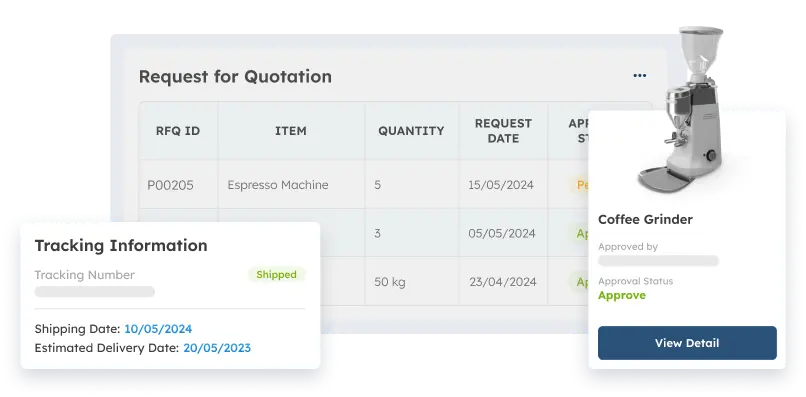
ScaleOcean’s purchasing software integrates requests, approvals, and payments into a single system. By automating data entry, designing bespoke approval routes, and tracking every step, it lowers human error, eliminates delays, and replaces cluttered spreadsheets with a simple, efficient process.
ScaleOcean not only streamlines purchases but also promotes growth through programs such as the CTC grant, making digital adoption more accessible to SMEs. Our platform enables cost control and informed judgments. The following are the primary characteristics of ScaleOcean’s software:
- Integrated Workflow from Request to Payment: Combines requests, approvals, and payments into one seamless and efficient purchasing system.
- Customizable Approval Routes: Create tailored approval flows that align with internal company policies and hierarchy.
- Automation to Reduce Errors and Delays: Reduces manual work, eliminates delays, and minimizes errors in the purchasing process.
- Enhanced Visibility and Tracking: Monitor every purchase step with full visibility and real-time process tracking.
- Cost Control with Real-Time Budget Monitoring: Track spending live to make informed decisions and maintain tighter cost control.
8. Conclusion
A purchasing process is more than just a set of administrative activities. It serves as a strategic framework for cost control, efficiency improvement, and risk reduction. Understanding its main stages allows firms to identify chances to improve operations and achieve wiser, more sustainable growth.
ScaleOcean provides integrated solutions such as Purchasing, Inventory, and Accounting modules to help streamline spending and increase visibility. These tools facilitate the conversion of manual operations into efficient workflows. Get a free demo of ScaleOcean today to see how it may help your business.
FAQ:
1. What are the 7 steps of the purchasing process?
The seven steps encompass recognizing a need, defining requirements, selecting suppliers, negotiating terms, creating purchase orders, receiving deliveries, and finalizing payments, while ensuring that accurate records are maintained for accountability.
2. What are the 5 P’s of purchasing?
The five Ps Price, Place, Product, Promotion, and People highlight essential considerations companies use to secure value and effectiveness when managing purchasing and procurement activities.
3. What are the 5 stages of the purchasing decision process?
The five stages include identifying a need, researching information, assessing available options, deciding to purchase, and reviewing the outcome after buying to guide smarter future decisions.
4. What are the 10 steps in the purchasing process?
The ten steps involve need identification, requirement specification, supplier search, bid review, contract negotiation, issuing POs, receiving goods, quality checks, invoice approval, and completing the payment cycle with proper documentation.